Cattle rustling in the Old West was far more than a crime—it threatened families, livelihoods, and entire communities. While many people associate cattle theft with cowboys and frontier legends, the dangers of rustling were very real across Texas, Oklahoma, and the American West. In this guest post, discover the history behind cattle branding, why livestock theft was so devastating, and how these true-to-life events inspired the conflict in Seeds of Hope, a Christian historical fiction novel from the Truitts of Texas series.
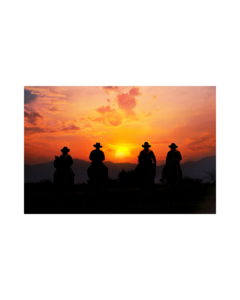
When people hear the word rustling, they picture the Old West: moonlit cattle drives, desperate men with ropes and six-shooters, and ranchers guarding their herds with a shotgun across their knees.
And honestly? That image isn’t far off.
Rustling—most commonly cattle theft—was a serious problem throughout the American West in the 1800s, especially in cattle-rich states like Texas, Kansas, and Oklahoma. Ranches often stretched across thousands of acres with little fencing, making livestock vulnerable.
So if cattle roamed across wide stretches of land, how did ranchers know which cows belonged to whom?
The answer: Branding.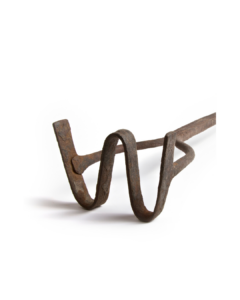
Ranchers marked cattle with brands—unique symbols seared into the hide with a hot iron—to identify which animals belonged to which ranch. A brand served as a rancher’s signature, his proof of ownership. Alter that mark, and a thief could claim someone else’s cattle as his own, drive them far away, and sell them before the rightful owner realized they were gone.
That made rustling both simple … and devastating.
For many families, cattle weren’t just property—they represented livelihood, security, and survival. That’s why apprehending the thieves was imperative. But finding the criminals was difficult and dangerous. Worse, the rustlers weren’t always desperate individuals trying to survive. Sometimes the evil doers were corrupt businessmen, gang members, or even neighboring ranchers.
That element of danger and uncertainty made rustling the perfect backdrop for Seeds of Hope, the second book in The Truitts of Texas series from Scrivenings Press.
As deputy of Blooming Grove, Rabb Truitt has sworn to protect the people and livelihoods of his community. When cattle begin disappearing, the threat strikes at the heart of the town. Ranchers stand to lose more than livestock—they risk losing their security, their futures, and the fruits of years of hard work.
The effects of rustling go much deeper than missing cattle. There’s deception. Broken trust. And the insecurity that arises when something is stolen from our homes.
Maybe that’s why rustling still feels relevant today. It never truly disappeared.
Modern ranchers still deal with livestock theft. Cattle trailers disappear. Herds vanish. The methods may look different, but the crime remains.
City life has its own version of rustling. Cars are stolen. Packages disappear from front porches. Equipment vanishes from job sites. Identity theft robs people of security and peace of mind.
And in 2026, there’s another ambiguous presence to navigate: artificial intelligence (AI).
AI offers incredible possibilities, but this new technology must be used with integrity. The words of Luke 12:48 ring true: From everyone who has been given much, much will be required; and from the one who has been entrusted with much, even more will be expected.
There’s a reason many books, mine included, contain a warning that the text should not be used to train AI. It’s no secret that books have been copied, scraped, or used without permission.
At what point does innovation cross into theft? When does convenience become copyright infringement?
Because stories don’t appear out of thin air.

Novels are born from long hours of research, from early mornings and late nights at the keyboard, from prayers whispered over difficult scenes and stubborn plot holes. They are shaped through rewrites, edits, and countless small decisions most readers will never see.
Whether it’s 1896 or 2026, it comes down to the same question: will we respect the work, property, and labor of others—or take what isn’t ours?
That question mattered in the Old West.
It still matters today.
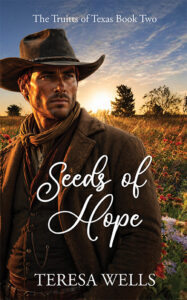
Title: Seeds of Hope
Author: Teresa Wells
Genre: Western Historical
Other books in this series: What Brings Us Joy
Two wounded hearts. One fragile hope. A love that dares to take root.
Blooming Grove, Texas, 1896.
Deputy Rabb Truitt is known for his quick wit, bold confidence, and unshakable commitment to protecting his town. But he hides a painful secret: he cannot read. When his mistake in a written report allows a criminal to walk free, Rabb’s shame pushes him toward the one decision he believes will protect everyone: resignation.
Sallie Parker refuses to let him give up.
After surviving a devastating fire, Sallie is determined to step out of hiding and live with purpose again. When she offers to help Rabb learn to read, their quiet lessons become more than either expected, stirring a hope neither one feels brave enough to name.
But trouble is spreading through Blooming Grove. Cattle disappear. Thieves evade capture. Angry townspeople demand justice. And when Rabb and Sallie discover a dangerous connection between the rustlers and Sallie’s school, they must work together to uncover the truth before more lives are destroyed.
Perfect for fans of Karen Witemeyer, Mary Connealy, and Jody Hedlund, Seeds of Hope is a faith-based historical romance filled with small-town danger, friends-to-lovers tenderness, found family, courage, and the promise that God can grow hope in even the hardest places.
Start reading Seeds of Hope today and return to Blooming Grove, where faith takes root, courage blooms, and love grows in God’s perfect timing.
 A former teacher and librarian, Teresa Wells treasures a story threaded with redemption and hope. She loves people, history, and studying the Bible. Teresa is a member of Novel Academy and American Christian Fiction Writers Association, where she volunteers behind the scenes. She lives with her family outside of Dallas, Texas.








































 Email:
 Address: 15 Lucky Lane
 Phone : 501-289-9319
I love this connection between cattle thieves of 1896 and identity and AI thieves of 2026.
Cattle and horses are still stolen in today’s world, as are cars and other personal belongings. We must stay alert to liars and thieves, pretenders and charlatans, recognizing them as what they are. May we work with our hands and do our best for the Lord.
Keep up the good work, Teresa Wells!