
At Scrivenings Press, we know one of the biggest challenges writers face is creating characters who are nothing like themselves. In this guest post, suspense author Heidi Glick shares her story of stepping outside her own experience to write authentic law enforcement characters. From hands-on research to reflecting on her own perspective, Heidi shows how writers can stretch their imagination and craft believable characters—even when they’re very different from the author behind the page.
I enjoyed reading mysteries when younger. Maybe that’s how I ended up writing suspense as an adult. I’ve learned suspense writing requires a basic knowledge of police procedures to sound accurate. My challenge was how to write suspense having never worked in law enforcement. I don’t even have a family member who is a police officer.
Years ago, I heard about the Crime Scene Writers forum. While asking questions on that forum, I met another writer who worked in law enforcement and was also a member of ACFW. We were critique partners for a while, and he helped me with a manuscript. But then I had one baby and then another, and I put writing on hold for about ten years.
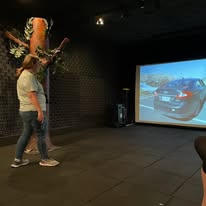
Later, I brushed off that manuscript and finally sat down and reviewed the suggestions. They were good, encouraging comments. I kept writing and saved money to attend Police Writers’ Academy, which allows writers to experience a small taste of what law enforcement faces. There I learned about K-9 units, sally ports, and task forces. Also, I took part in a virtual traffic stop. The officer said I was the only attendee that day who had considered taking cover in that scenario. Sadly, I still virtually died. Oh well. You can’t win them all.
After that, I attended my county’s sheriff’s citizens academy, where I learned all about local law enforcement. I measured the speed of oncoming traffic, toured the local jail, learned about firearms used by local officers, and met our local K-9 dog before he retired. Someday I plan to do a ride-along with local officers, as soon as I find time between writing, editing, and recently, also homeschooling.
I have taken classes on police procedures and writing and bought books related to law enforcement, fighting, poisons, and just about every topic related to suspense. I’ve also watched videos about fighting and martial arts.
Not only has my research helped me write a character who is not like me. Learning about law enforcement has improved my editing skills. When I notice a detail in a manuscript that looks out of place when it comes to police procedures, I leave a comment for the author.
The same writer who helped me years ago still answers many of my crazy research questions. Over the years, I have had grandiose ideas of what might take place, and his suggestions have kept me anchored closer to reality.
One suggestion reminded me that my characters needed to run toward danger instead of cowering. That’s stuck with me. Because I’m not in law enforcement, unless my kids are in harm’s way, I’m probably running away from danger. That comment encouraged me to reflect on who my characters are and how they’d react.
I rewrote the fight scenes in Gazing into Darkness because I wanted to make sure I showed that, as a federal agent, Stacey Sanderson wouldn’t be a helpless damsel in distress. Yes, real law enforcement work is more paperwork and less thrilling than suspense novels, but I hope to convey as much realism as possible and try to do justice to those who serve in law enforcement. Inaccuracies, unfortunately, shape what the public presumes about law enforcement and the criminal justice process.
Along my writing journey, I’ve found others who are happy to help me add details to my story and answer my unusual questions. Suspense authors joke about how the government is going to show up and be suspicious of our search histories, but in all seriousness, I have found everyone I’ve asked for help from to be kind once I’ve explained I’m an author.
And while I write characters who aren’t like me, I can include details that resemble me. My heroine has an elderly cat, and so do I. My heroine likes to do things by the book and is a hard worker, and I like to think she takes after me in that regard. Finally, she loves Jesus, and so do I.
So, fellow authors, write what you know, and research what you don’t. Readers, may you enjoy my stories and the painstaking hard work that goes into ensuring accuracy. Despite help from researchers, inevitably, being human, I will make mistakes, but I try my best to get things right.

Heidi Glick writes romantic suspense and is a member of American Christian Fiction
Writers and Faith, Hope, and Love Christian Writers. She has an eye for detail and includes law enforcement particulars in her stories, grounding the reader in scenes. She’s attended Writers’Police Academy and the Hancock County (Ohio) Sheriff Citizen’s Academy to ensure accuracy of story details. Though she grew up in Southern California, Heidi now considers rural Northwest Ohio her home. Readers can learn more about Heidi on her
website, https://authorheidiglick.com/
Connect with Heidi:
http://www.facebook.com/authorheidiglick
https://twitter.com/HeidiGlick1
https://sleuthsandsuspects.blogspot.com/
https://www.goodreads.com/author/show/7035003.Heidi_Glick
https://www.bookbub.com/authors/heidi-glick



















































































 Email:
 Address: 15 Lucky Lane
 Phone : 501-289-9319
Great post, Heidi! Love all the work you’ve done to immerse yourself into real policy academy training. You rock!
Great tips for mystery writers! I’d love to learn more about how law enforcement works. How interesting!
Wow, Heidi! It’s so awesome to read about how much time you invested in research and hands-on experience to write authentic characters. Thanks for sharing!
Great post! Sounds like interesting research.